
Harmonic mixing is frequently taught as a rigid, linear formula: mix within the exact same Camelot key (e.g. 8A to 8A) or take a single step clockwise or counter-clockwise (8A to 9A or 8A to 7A). While this preserves melodic safety, staying within adjacent keys for more than 45 minutes can cause dancefloor fatigue due to tonic monotony.
Elite festival and club DJs control energy trajectories through active harmonic modulation: intentional key shifts that raise tension, create sudden euphoric lift, or reset crowd dynamics. In this tactical guide, we break down the mathematics of the Camelot Wheel, demonstrate four advanced modulation techniques, and show how automated metadata injection in Beatport Downloader PRO ensures pitch perfection on CDJs.
1. The Four Harmonic Modulation Rules
| Technique | Camelot Movement | Musical Interval | Auditory & Dancefloor Effect |
|---|---|---|---|
| 1. Smooth Transition | Same key or ±1 (e.g. 8A → 8A / 9A / 7A) | Tonic / Perfect 4th / Perfect 5th | Clean hypnotic blend. Vocals and synth leads layer without dissonance. |
| 2. Energy Boost (+2 Semitones) | +7 Camelot positions (e.g. 8A → 3A) | Whole step up (+2 semitones) | Noticeable euphoric uplift. Creates sudden energy surge during a breakdown. |
| 3. Relative Mood Flip | A ↔ B Same Number (e.g. 8A ↔ 8B) | Relative Minor ↔ Relative Major | Transforms dark tension into bright emotional euphoria without dissonance. |
| 4. Energy Reset (-1 Semitone) | -7 Camelot positions (e.g. 8A → 1A) | Half step down (-1 semitone) | Creates deep, dark drop in tension. Excellent for introducing heavy sub-bass grooves. |
2. Visualizing the Energy Modulation Pathways
3. Why Software Key Detection Fails (And How Native Metadata Fixes It)
Many DJs rely on automatic real-time key analysis inside their DJ software. However, algorithmic analysis tools frequently make critical errors:
- Octave & Fifth Confusion: Complex polyphonic synth chords can confuse beat-grid analyzers, mislabeling an 8A (A Minor) track as 3A (B Minor) or 7A (D Minor).
- Key Drift from Tempo Adjustments: If Master Tempo (Key Lock) is disabled and you pitch a track up by +3.5%, the key shifts up by a full semitone, breaking harmonic compatibility.
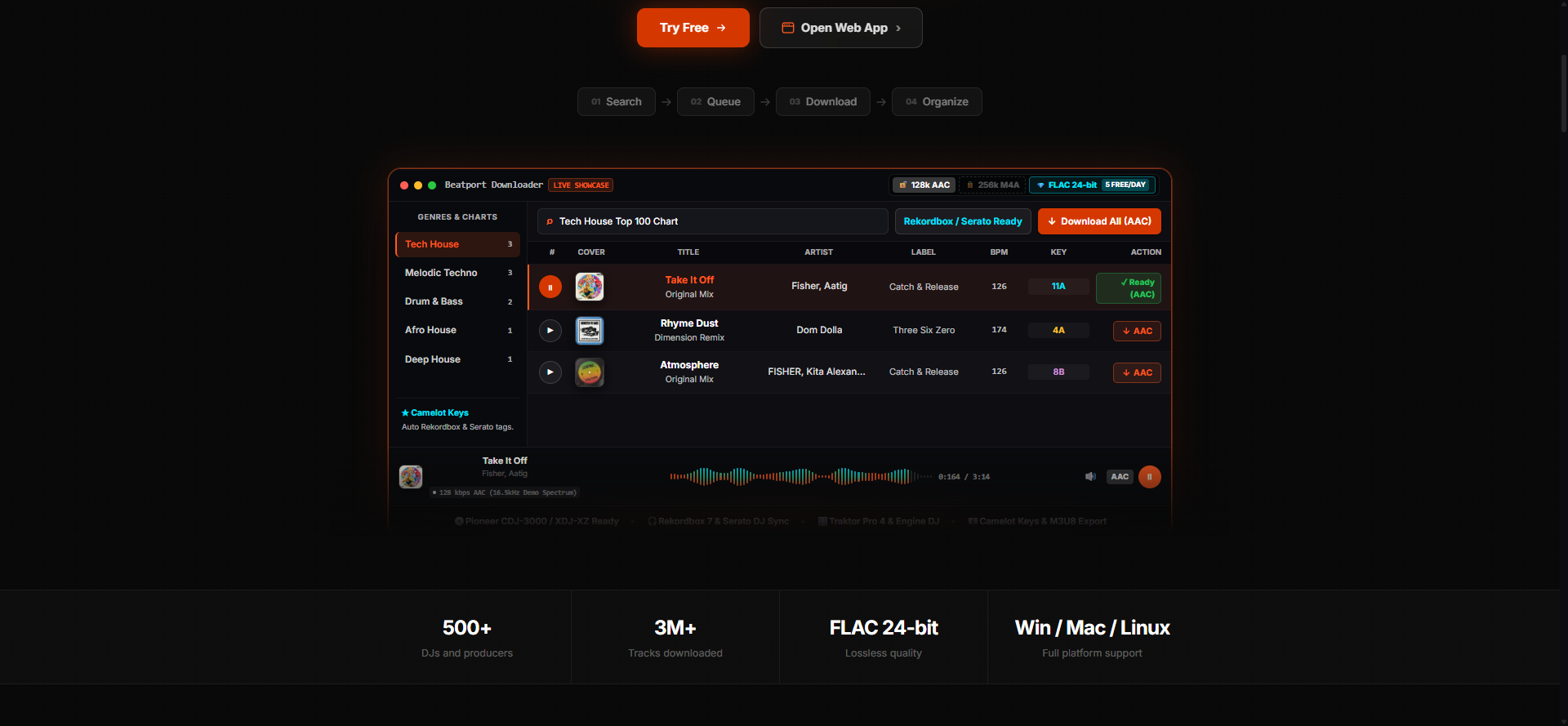
With Beatport Downloader PRO, every track is tagged with official master release key signatures cataloged directly by the original record label and producer.
4. Dynamic Crate Structuring for 2-Hour Club Sets
- Zone 1: Warm-Up Foundation (Tracks 1 to 8): Stick to minor keys in adjacent groups (e.g. 6A, 7A, 8A). Keep BPM consistent around 124-126 BPM to establish groove.
- Zone 2: First Modulation Surge (Track 9): Execute a +2 semitone boost (+7 Camelot: 8A → 3A). Mix during a stripped-back percussion breakdown to maximize the key reveal on the drop.
- Zone 3: Major Key Emotional Euphoria (Tracks 14 to 18): Flip from 3A to 3B (D-Flat Major) for a massive festival vocal anthem.
- Zone 4: Peak-Time Closer: Drive the energy back into dark minor territory (3B → 10A) with driving 130 BPM basslines.
Curate Harmonically Tagged Crates Instantly
Download complete Beatport Top 100 releases in 24-bit lossless FLAC with embedded Camelot keys and master BPM values.
Open Beatport Downloader PRO